
Cape Breton man sentenced for fatally shooting man in head

A Cape Breton man has been sentenced to nine years in prison for fatally shooting another man in the head with a shotgun during an early morning drug deal.
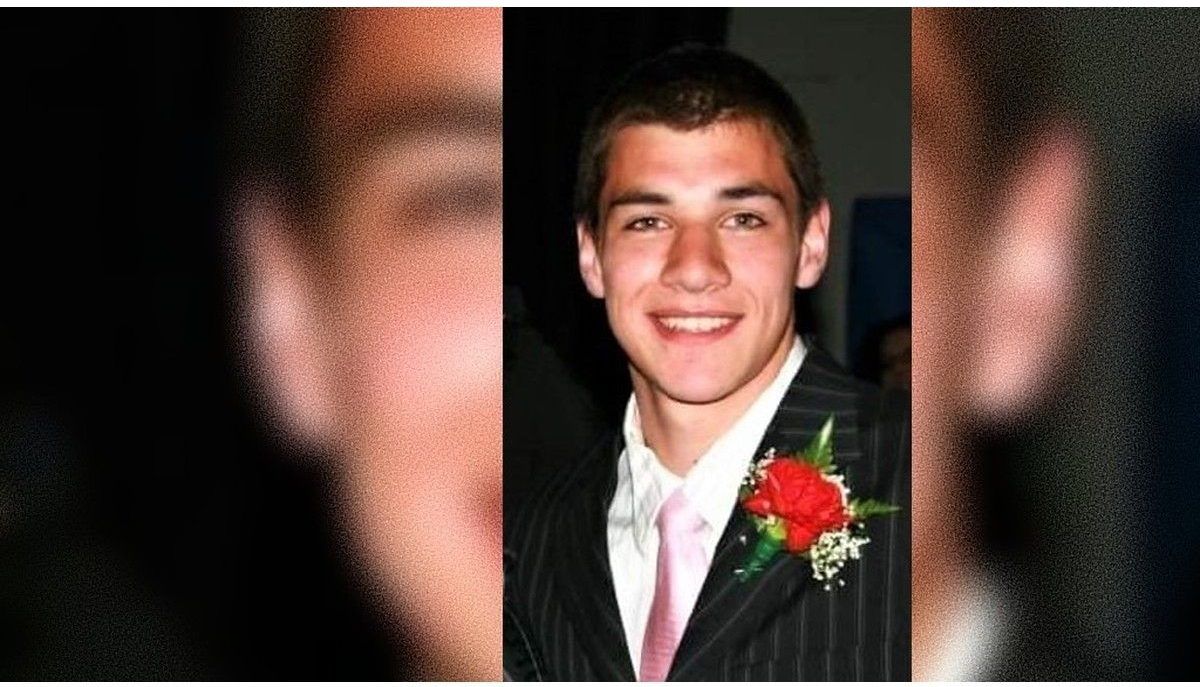
Anthanasius Dennis, 26, had previously pleaded guilty to manslaughter for the Aug. 9, 2021, death of Andrew Carter Morris, 30, in Eskasoni First Nation.
According to the facts outlined in Nova Scotia Supreme Court in Sydney, Dennis’s brother, Kurt Daniel Gould, called Morris at 3:06 a.m. on the day of the killing to arrange a drug purchase on Beach Road in Eskasoni.
Gould and his common-law partner Scentina Marie Michael then left in her vehicle and picked up an intoxicated Dennis before driving together to meet Morris.
When they arrived, Morris and his associate, Chancellor Sylliboy, were seated in a vehicle. Sylliboy exited, advising Morris that he was going to get the money, and approached Michael’s vehicle.
As soon as Sylliboy reached the vehicle, Dennis demanded that he hand over everything he had. After Sylliboy refused, Dennis exited the vehicle brandishing a shotgun and struck him with the butt of the weapon before ordering him to empty his pockets.
Gould then exited the vehicle and joined in the robbery and assault.
The two brothers ordered Sylliboy to walk with them to the other vehicle and began smashing the windows and demanding that Morris exit the vehicle.
Dennis discharged the shotgun, striking and damaging the driver’s side window.
Sylliboy and Morris were then forced to kneel and Dennis asked Sylliboy at gunpoint whether he owed Gould money.
Morris intervened, telling Gould that he would get him his money. Dennis then took Sylliboy’s phone, smashed it, and directed Morris to stand up.
In his police statement, Sylliboy told investigators he then heard a loud “boom” but did not see where the shot came from, explaining that he was looking downward and had his eyes closed.
After the shooting, Sylliboy was ordered into Michael’s vehicle with the three co-accused. Michael then drove away at a high rate of speed.
At approximately 5:47 a.m., RCMP officers responding to a report of a vehicle parked on Beach Road found Morris dead on the roadway, lying on his back with his feet near the rear bumper of the vehicle.
A large quantity of blood surrounded his head, and his body displayed obvious signs of significant trauma.
An autopsy later determined he had died from a close-range gunshot wound to the head.
Approximately 18 months later, Gould and Michael were arrested and each charged with first-degree murder and armed robbery in relation to Morris’s killing.
Then, on May 4, 2023, RCMP officers arrested Dennis at a home in Eskasoni and charged him with first-degree murder.
Michael told investigators that she had driven Dennis and Gould to the scene on Aug. 9, 2021, to purchase drugs from Morris.
She admitted that she knew Gould had a shotgun that night and that he had brought it from their home.
Michael told police she observed Dennis, Gould, Sylliboy and Morris talking. She said Dennis, Gould and Sylliboy returned to her vehicle, with Gould and Dennis repeatedly yelling at her to “drive.” She dropped Sylliboy off near his residence and then dropped off Dennis, who was carrying a black duffle bag. Michael said after she dropped Dennis off, the shotgun was no longer in the vehicle.
The weapon was never recovered.
While the Crown and defence agreed that the exact circumstances immediately preceding Morris’s death from the gunshot wound to the head are unknown, both sides acknowledged that Dennis maintained continuous possession of the only firearm present.
Nova Scotia Supreme Court Justice Shane Russell noted that while all three co-accused participated in the manslaughter, “Dennis was the one to initiate the violence and played the role of the dominant aggressor throughout the encounter.”
Russell said there is no evidence that Dennis acted in self-defence or that either Sylliboy or Morris engaged in physically aggressive, threatening, or intimidating conduct toward any of the three co-accused.
“I find that the circumstances were such that Mr. Dennis must have had a real awareness of the risk when he committed the unlawful acts. In reaching that conclusion, I rely on the circumstances known to him at the time. He was repeatedly brandishing the shotgun while intoxicated. He actively used it to intimidate and control the movements of two individuals, discharged the firearm at the vehicle, and used it as a blunt instrument to assault Mr. Sylliboy. Despite those obvious risks, he continued to handle and employ the firearm throughout the incident,” Russell wrote in his sentencing decision issued Oct. 23.
“He remained undeterred in his resort to violence as the events unfolded. There is no evidence that he exercised any meaningful restraint or reflection at any stage of the incident. Rather, the agreed facts disclose a continuing course of escalating and dangerous conduct involving the use of a loaded firearm. In these circumstances, I am satisfied that Mr. Dennis was well aware of the objective risk of death or life-threatening injury arising from his actions coupled with that of the co-accused.”
The Crown was seeking a federal sentence of 12 to 14 years, emphasizing deterrence and denunciation for a “senseless and highly violent offence” that involved the use of a firearm and a protracted exercise of control over the victim and Sylliboy.
The defence argued for a sentence of five years imprisonment, urging the court to give heavy consideration to the Gladue principles, Dennis’s young age, early guilty plea, and expressions of remorse. In the Canadian justice system, Gladue principles are a way for the judge to consider the unique circumstances or experiences of Indigenous peoples.
In his decision, Russell outlined “significant Gladue factors” in Dennis’s background that mitigate his moral blameworthiness as an Indigenous offender.
The report detailed that Dennis suffered repeated childhood sexual abuse by a neighbour, resulting in a diagnosis of complex post-traumatic stress disorder; intergenerational trauma as a descendant of Indian Day School survivors; substance abuse; and growing up in a highly stigmatized neighborhood of Eskasoni, where residents were labelled as “Jojij,” a term associated with poverty, violence, and drug addiction.
As well, weeks before the killing, Dennis “carried three caskets in a single month,” losing his closest friend to suicide alongside his aunt and godmother. Following the death of a friend, he made several suicide attempts and later attempted suicide again while in custody for the death of Morris.
“His circumstances do not excuse his conduct, but they help explain it. I am satisfied that, but for these background and systemic factors, Mr. Dennis would not have found himself in the circumstances he did that morning or acted in the reckless and callous manner that followed. At that point in his life, his circumstances had become so bleak that travelling with his brother in search of drugs, while intoxicated and in possession of a loaded firearm, had become his reality,” Russell wrote.
“Mr. Dennis was not granted a head start in life; instead, he was dealt what often appeared to be a dead end, with little support, guidance, or opportunity to chart a different path. As he became increasingly consumed by alcohol addiction and a profound mental health crisis, he lacked the capacity to alter that course on his own. His circumstances left him ill-equipped to overcome the forces that had long shaped his life.”
Russell also placed significant weight on the victim impact statements provided by Morris’s sister, Georgett Morris, and his niece, Chrisie Gould.
“Their statements describe a young Indigenous man who was deeply loved by his family and community. Mr. Morris would have recently celebrated his 36th birthday; his life was senselessly taken at the age of 30. He was the father of two young children, who must now grow up without his guidance and support,” he wrote.
“Ms. Morris describes the profound and lasting impact of this violent crime on herself, her family, and, to some extent, her community. She speaks of the emotional toll of losing her younger brother and is haunted by what Mr. Dennis and his accomplices did to him, as well as by the callous manner in which they left him alone on the pavement that morning. She describes her brother as her best friend, a skilled man who had plans to return to work. She recounts experiencing grief, rage, anger, loss, anxiety, depression, disbelief, and confusion. At times, she contemplated ending her own life and was required to take time away from work.
“Since her brother’s death, her relationships have suffered. She struggles to engage in conversations, is hypervigilant in her surroundings, and feels unsafe and uncomfortable in crowded settings.
“She adds that her family continues to live in fear and endures many sleepless nights.”
Russell concluded that a sentence of nine years is “proportionate in the unique individualized circumstances” of the case
“It recognizes his acceptance of responsibility, youth, attenuated moral blameworthiness, and genuine prospects for rehabilitation,” he wrote.
After being given enhanced credit for the 1,267 days he has already spent in custody, Dennis’s remaining sentence to be served is 1,386 days, or just over three-and-a-half years.
Russell also issued a lifetime weapons ban and ordered Dennis to provide a DNA sample to the national registry.
Meanwhile, both of Dennis’s co-accused have also pleaded guilty to manslaughter.
Michael was sentenced on April 29, 2025, to six years custody to be served consecutively with a three-year federal sentence she was serving for an unrelated robbery.
Gould is scheduled to be sentenced on Dec. 2, 2026.
Originally reported in SaltWire Annapolis Valley.